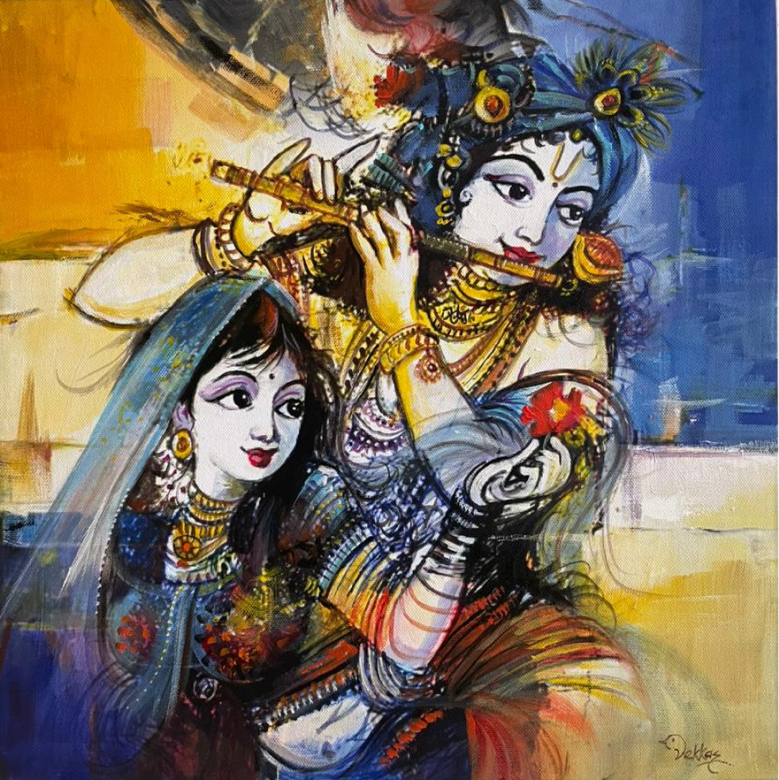
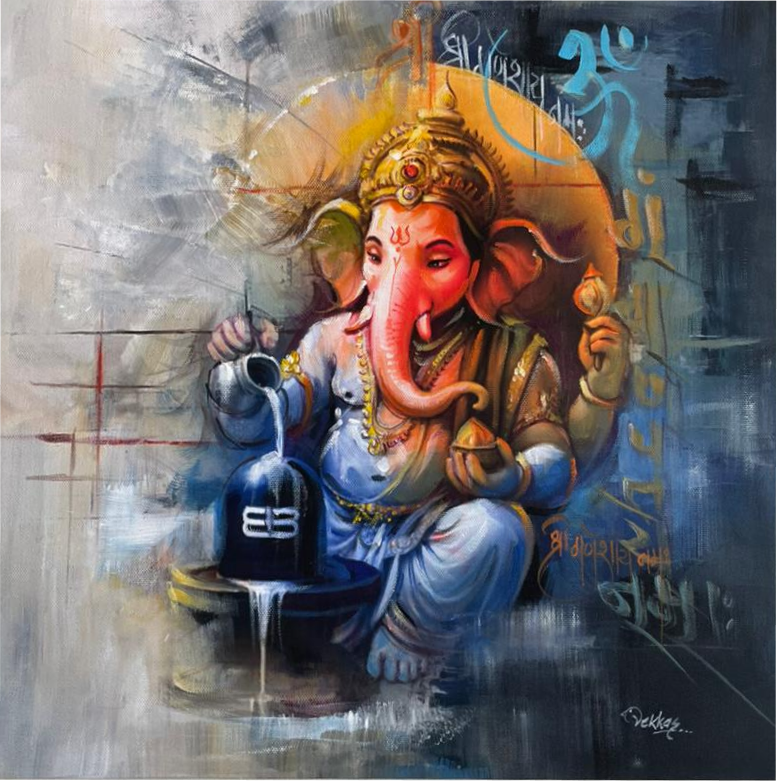
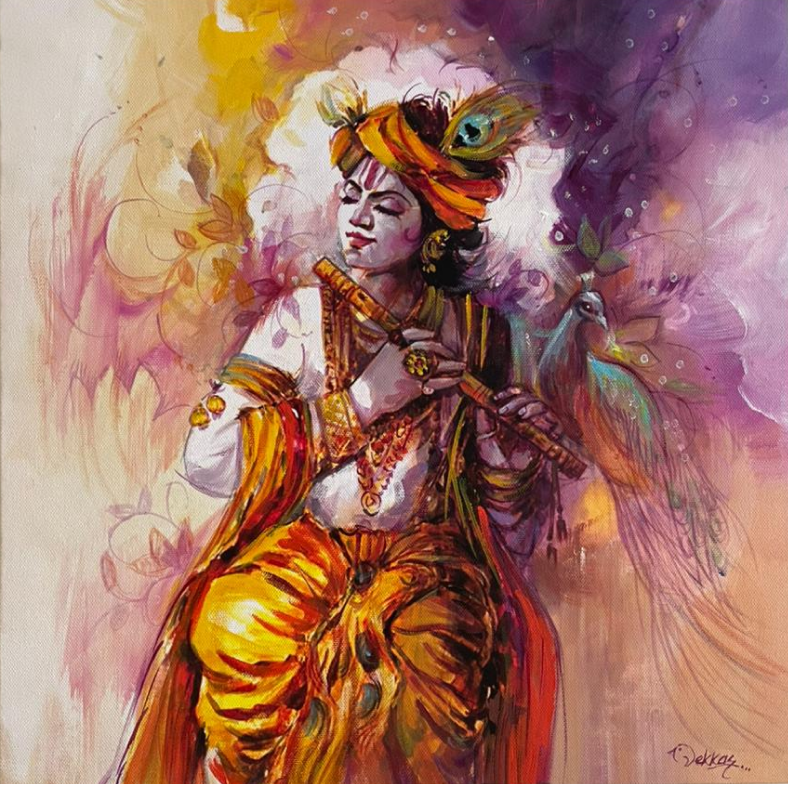
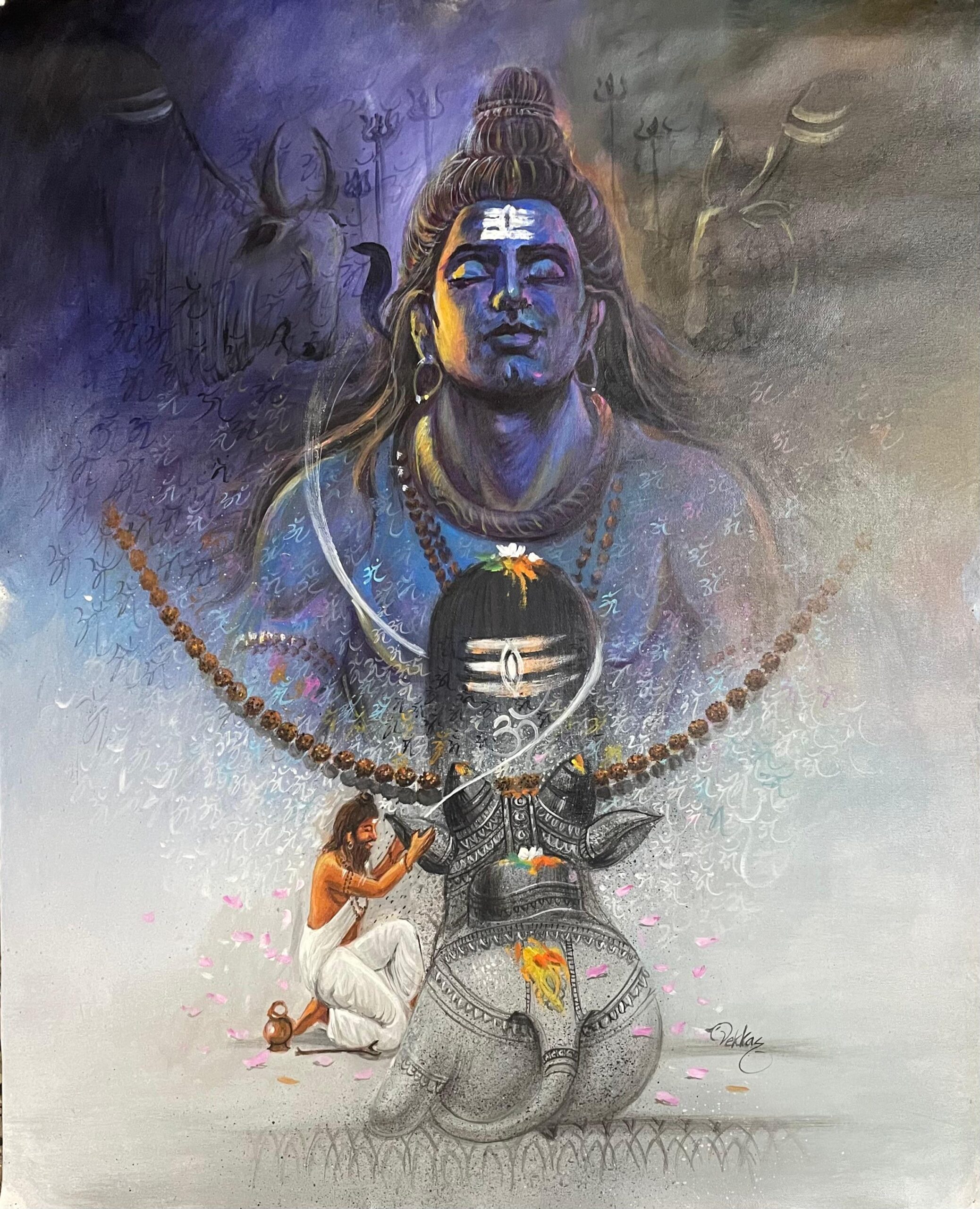
Your home or office carries a silent language one that speaks before you do. For centuries, India’s most discerning patrons have understood that a Ganesh painting on canvas is not mere decoration; it is an intentional declaration of wisdom, prosperity, and refined cultural identity.
Why Ganesha Remains the Most Revered Subject in India Artwork
There is a reason that across four millennia of Indian artistic tradition, no deity has commanded the canvas with the consistency and reverence of Ganesha.
From the cave murals of ancient Maharashtra to the Peshwa-era palace frescoes of Pune, the image of the elephant-headed deity has been the cornerstone of Indian creative expression. He is Vighneshwara — the remover of obstacles — and his presence at the threshold of any new beginning carries the weight of that promise.
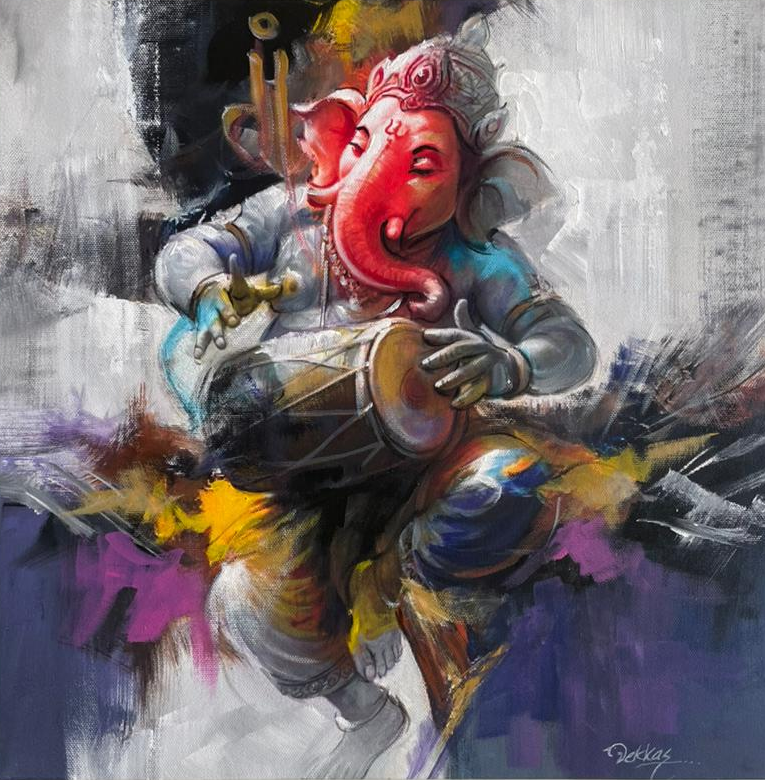
In the contemporary context of India artwork, a Ganpati canvas painting carries this same cultural gravity, translated into the language of modern interiors.
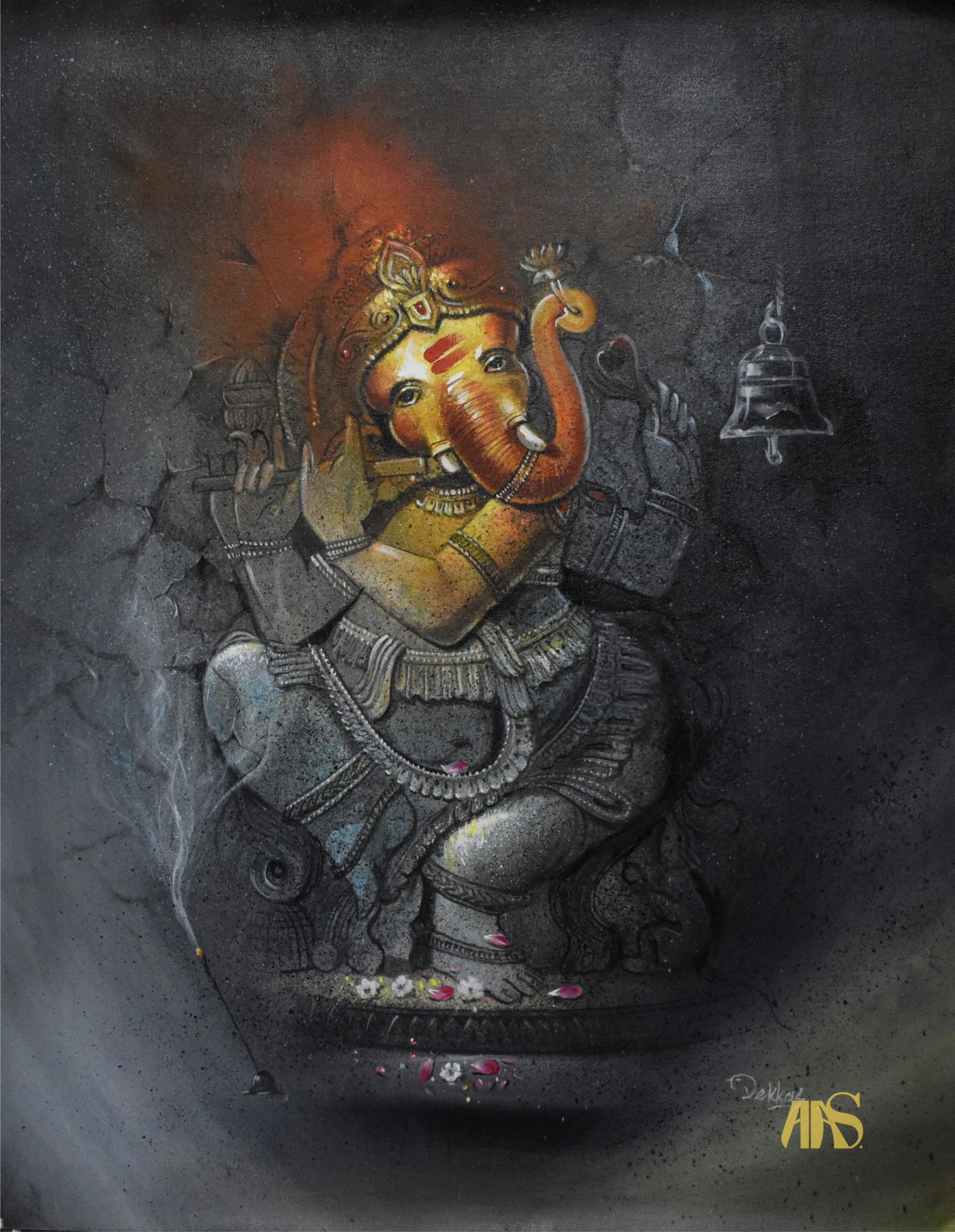
The History Behind Every Ganesh Painting on Canvas
From Sacred Murals to the Modern Studio
The earliest visual representations of Ganesha emerged in the Gupta period (4th–6th century CE), where the deity was carved with singular authority in stone and bronze. These were not decorative objects. They were invocations.
As Indian artisanship matured through the Mughal era and into the colonial period, Ganesha imagery absorbed new influences — Persian delicacy in linework, European naturalism in shading, creating hybrid styles that remain deeply compelling today. The Paithan and Warli traditions of Maharashtra each developed their own distinctly Indian visual grammar for Ganesh painting on canvas.
What the finest contemporary studios do is honour this lineage without being imprisoned by it. The result is india artwork that feels both ancient and urgently relevant.
The Vastu Dimension
For the Indian executive attuned to Vastu Shastra, placement and iconography carry specific significance. A Ganpati painting facing the northeast corner (Ishanya) of an office or home the zone of wisdom and knowledge is considered highly auspicious.
The deity’s trunk position matters: a trunk curved to the left (Vamamukhi Ganesha) is considered easier to propitiate, and is the preferred choice for home environments.
These are not superstitions. They are centuries of spatial philosophy, and the most considered art acquisitions reflect this understanding.
Top 10 Colour Combinations for a Ganesh Painting on Canvas
The colour palette of a Ganpati canvas painting is not chosen arbitrarily. Each combination carries cultural resonance, and the finest original artworks are developed with this intentionality.
1. Saffron & Gold on Ivory White
The most classical of combinations. Deep saffron forms the deity’s skin tone, while gold leaf or metallic acrylic creates the ornamental detail. An ivory or warm white background gives the piece a museum-quality breathability.
2. Ultramarine Blue & Burnt Sienna
A bold, contemporary take. The cool depth of ultramarine against the warm earthiness of sienna creates a visual tension that reads powerfully in a modern boardroom or a high-ceilinged apartment.
3. Emerald Green & Antique Gold
A palette that echoes the temple-town aesthetics of Kerala and Karnataka. Emerald greens — achieved with layers of genuine chromium oxide in oil — against gold detailing creates a piece of extraordinary richness.
4. Black & Gold (Minimalist Contemporary)
For the executive whose interiors are governed by restraint. A dark charcoal or onyx background, with the deity rendered in burnished gold. High-contrast, high-impact, and entirely at home in a design-led Delhi NCR penthouse.
5. Terracotta, Ochre & Rust
Evocative of the laterite landscapes of the Deccan. These warm, earthy tones ground a space and create a sense of deep, settled comfort. An ideal choice for a home study or library.
6. Dusty Rose & Warm Grey
A softer, more contemporary palette increasingly favoured in refined residential interiors. This combination works exceptionally well in large-format canvases where subtlety of brushwork is the intended conversation.
7. Deep Burgundy & Cream
Regal. The deep wine of burgundy, used across the background and in the deity’s garments, against warm cream skin tones, creates an old-world opulence that speaks to legacy.
8. Teal & Copper
A pairing that captures the aesthetic of Indo-Portuguese Goa. Particularly striking when the copper is applied in impasto technique, creating a raised, almost tactile quality in the finished canvas.
9. White on White (Tonal Textures)
For the collector of rare sophistication. The deity is rendered almost entirely in whites — titanium, zinc, ivory — with the visual depth achieved entirely through the texture of the brushwork itself. It is a study in light.
10. Midnight Blue & Silver
A celestial palette. The deity rendered in layers of prussian and phthalo blue, with silver ornamentation. The effect is one of divine serenity — particularly powerful in a bedroom or meditation space.
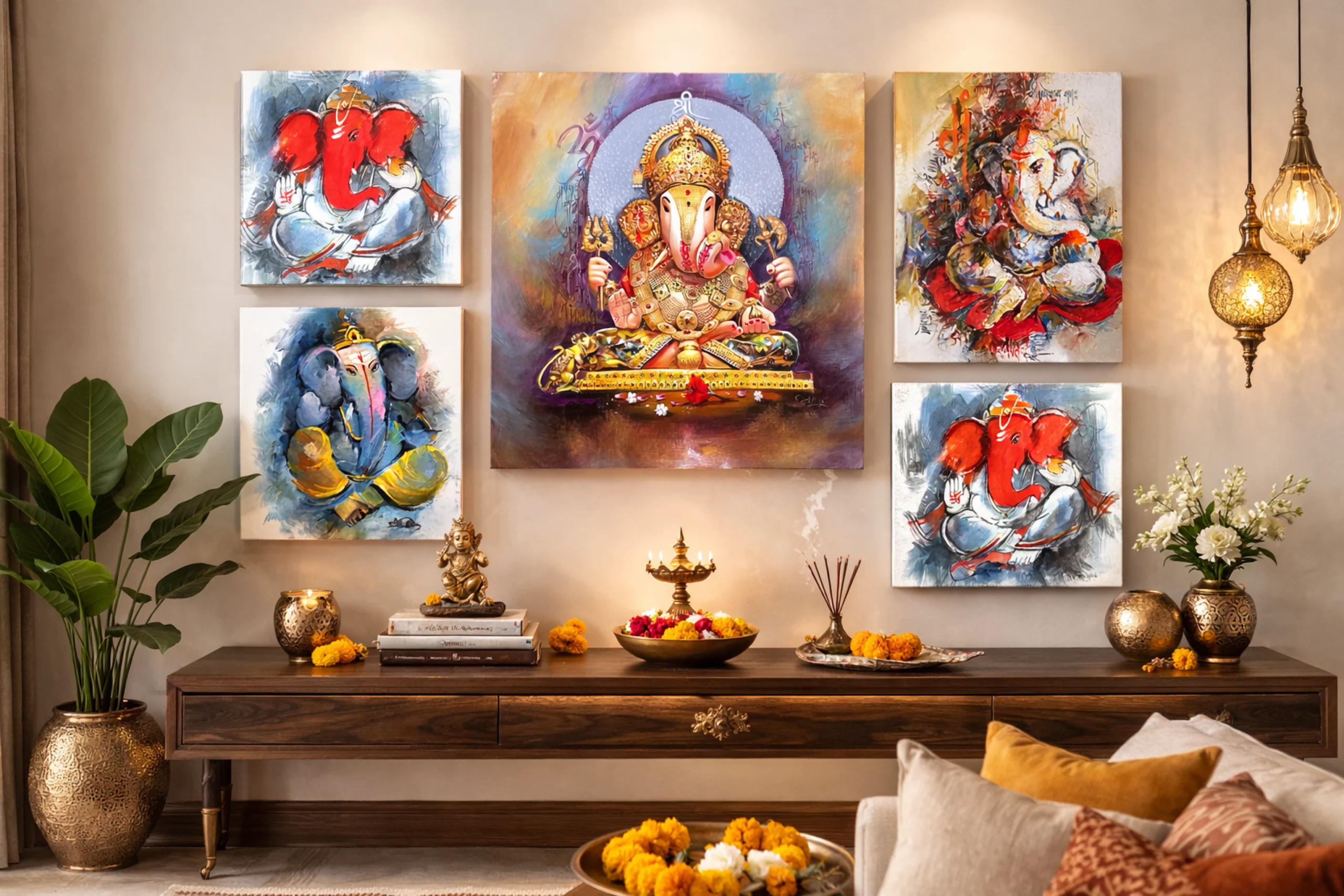
What Separates an Original Ganpati Canvas Painting from Everything Else
The Matter of Energy
There is a concept in Indian philosophical tradition of prana — the life-force present in all living things. An original, handcrafted canvas painting holds the accumulated energy of the artist: their hours of concentration, their deliberate choices, their physical engagement with the material.
A printed reproduction holds nothing of the sort. It is ink on substrate — a photograph of a thing, not the thing itself. For a space meant to inspire, energise, and reflect your life’s work, that distinction is not academic. It is fundamental.
The Matter of Permanence
Premium oil paints, properly applied to archival-quality canvas and sealed with conservation-grade varnish, do not fade. They do not crack under the atmospheric conditions of Indian seasons. The Mughal miniatures hanging in museums today were painted five hundred years ago.
A print, regardless of how it is framed or marketed, ages poorly. In a decade, it shows its origins.
The Matter of Conversation
Art in the space of an executive is a signal. Guests — clients, colleagues, peers — read it. A bespoke, hand-painted Ganpati canvas painting commands a conversation that a catalogue print simply cannot.
How to Commission a Truly Bespoke Ganesh Painting on Canvas
The finest india artwork is never plucked from a shelf. It is born from a conversation.
A considered commissioning process begins with understanding the space: the dimensions of the wall, the colour register of the existing interiors, the quality of natural light, and the intended emotional impact of the piece. Is this for a home entrance — a daily affirmation for the household? Or for a corner office — a subtle signal of values to those who enter?
From that conversation, the composition emerges: the posture of the deity, the arrangement of symbolic objects (the modak, the lotus, the broken tusk), the treatment of the background.
Then comes the palette confirmation. Then the sketch approval. Then the creation itself, with milestone updates that allow the collector to be part of the journey.
This is not how most art is sold. It is, however, how the finest art has always been made.
Where to Acquire Authentic India Artwork: What to Look For
The market for devotional canvas paintings in India is, regrettably, crowded with reproductions. Here is what separates a genuine studio from a marketplace aggregator:
- Provenance of the artist: Is there a named, skilled artist behind the work? Or is the piece simply attributed to “our team”?
- Medium transparency: Is the studio specific about whether oil or acrylic is used, and the quality grade of the pigments?
- Process visibility: Does the studio offer a consultation, sketch approval, and milestone updates — or simply dispatch a pre-made canvas in your preferred size?
- Framing integrity: Is framing done in-house with archival materials, or outsourced to reduce cost?
- Delivery standards: Is the piece professionally packaged to prevent transit damage, or shipped in a roll and left to chance?
These are the questions a discerning collector asks. The answers reveal everything.
The Artace Studio Collection: India Artwork Made for the Considered Collector
At Artace Studio, our Ganpati canvas paintings and Ganesh painting on canvas pieces are created through a five-phase, artist-led process. From your initial vision consultation to the final white-glove delivery, every piece is made-to-order — sized for your specific wall, coloured for your specific interior, and painted by hand by artists who have devoted their lives to this craft.
We work in oil and acrylic on premium canvas. We do not maintain an inventory. We do not sell prints.
If you are considering a devotional piece for your home, your office, or as a considered gift, we invite you to begin a conversation.
India Artwork That Speaks for Generations
A Ganpati canvas painting is not a purchase. It is a decision about what endures in your space, and by extension, in your life.
The finest india artwork carries the intention of the artist, the weight of tradition, and the particularity of your own vision — translated into oil and pigment on archival canvas. That is an entirely different category of object from anything that comes off a production line.
When you are ready to commission a Ganesh painting on canvas that will be spoken about for years to come, Artace Studio is at your service.
→ View our devotional collection or schedule a private consultation.
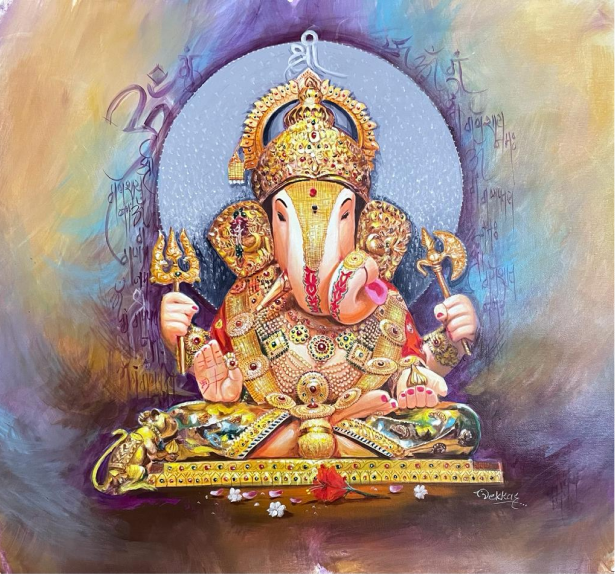
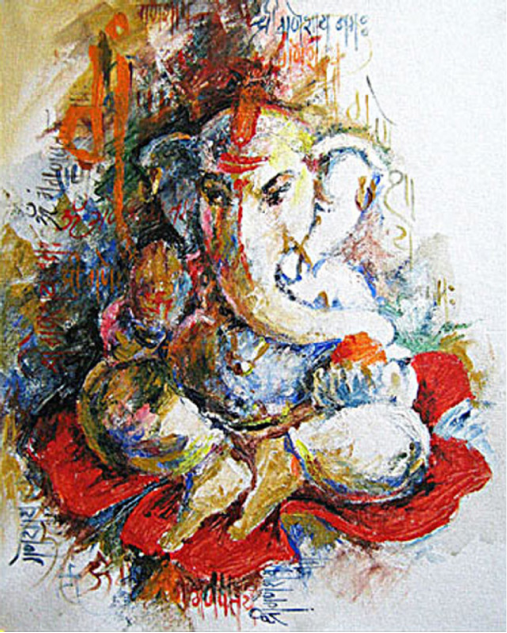
Each piece is made-to-order. No two are alike. No compromises.